
Article: Carbon Footprint Explained: How Your Choices Impact the Planet
Carbon Footprint Explained: How Your Choices Impact the Planet
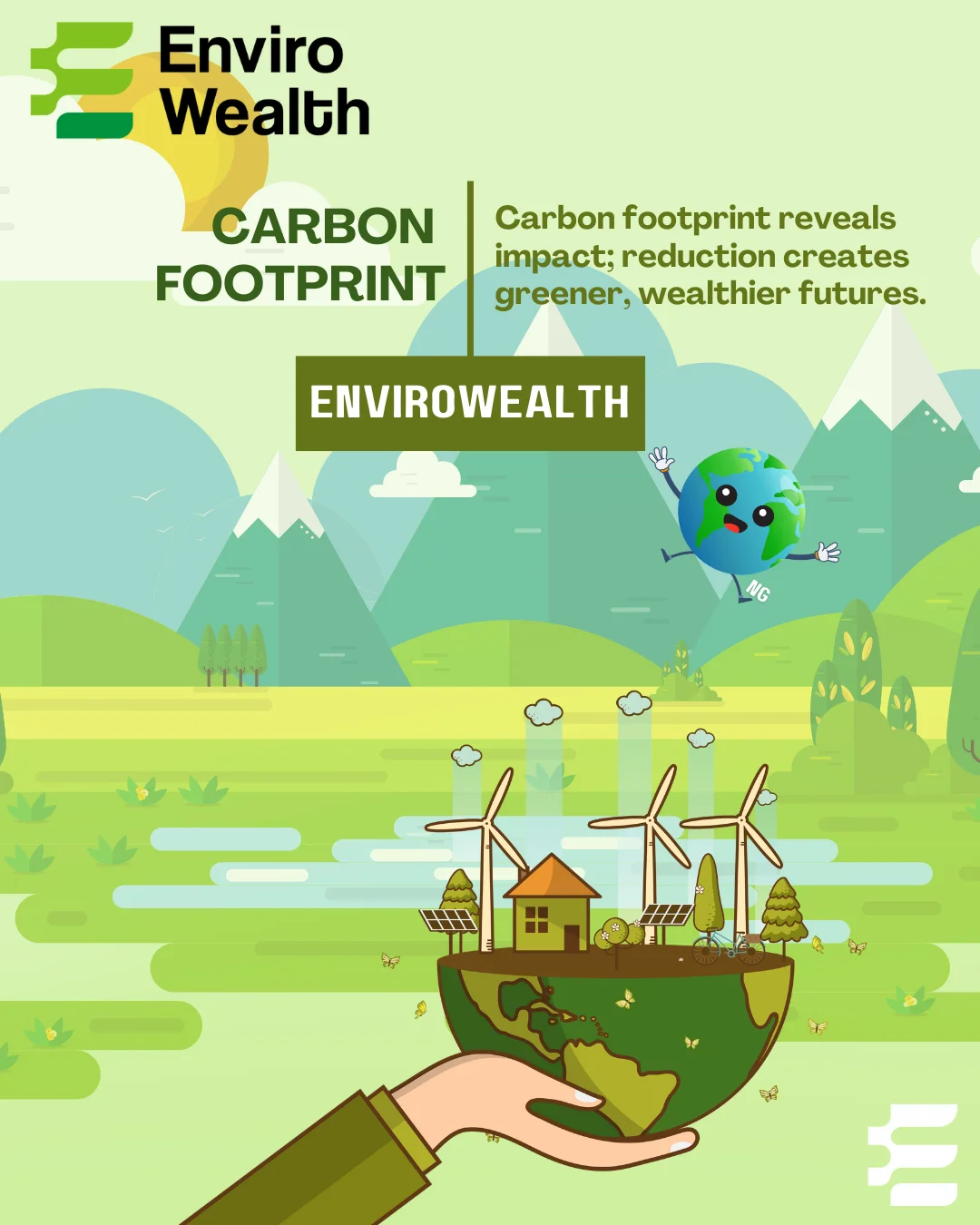
Introduction: Why Carbon Footprint Matters Today Rising global temperatures, extreme weather events, and resource depletion are all directly linked to greenhouse gas emissions, measured through carbon footprints. Understanding and managing this metric is essential for both environmental sustainability and financial readiness.
What is a Carbon Footprint? A carbon footprint is the total amount of greenhouse gases, primarily carbon dioxide (CO₂), emitted directly or indirectly by an individual, organization, product, or event. It is measured in metric tons of CO₂ equivalent (tCO₂e).
- •Types of Carbon Footprints:
- •Personal Carbon Footprint: Energy use at home, transportation, food consumption, and lifestyle choices.
- •Corporate Carbon Footprint: Direct operations (Scope 1), purchased electricity (Scope 2), and supply chain activities (Scope 3).
- •Product Carbon Footprint: Emissions from raw material extraction to manufacturing, distribution, use, and end-of-life disposal.
Major Sources of Carbon Footprints 1. Energy Consumption: Burning fossil fuels for electricity and industrial heat. 2. Transportation: Road transport, aviation, and shipping fleets. 3. Industrial Processes: Manufacturing textiles, steel, cement, and chemical synthesis. 4. Food & Agriculture: Livestock emissions, synthetic fertilizers, and agricultural deforestation. 5. Waste: Municipal landfills releasing methane and improper recycling chains.
- •The Financial Perspective: Carbon Footprint in Business
- •Traditionally viewed as a compliance burden, carbon efficiency is now a core competitive metric:
- •ESG Investment: Capital flows preferentially toward enterprises with transparent carbon reduction roadmaps.
- •Cost Savings: Optimizing energy efficiency directly reduces recurring operational overhead.
- •Regulatory Readiness: Preparing early shields businesses from carbon taxation and border adjustment tariffs like CBAM.
EnviroWealth: Bringing Net Zero 2070 Closer EnviroWealth empowers organizations with AI-powered carbon accounting (EnviroTracker), verified carbon offset credits, green portfolios, and real-time CSR tracking.
Conclusion The fight against climate change starts with one number: our carbon footprint. By understanding it, reducing it, and offsetting it, we can build a greener and wealthier future together.
Ready to engineer your low-carbon transition?
Deploy EnviroWealth’s real-time telemetry rails and automated compliance engine.