
GRI Standards for Sustainability Reporting
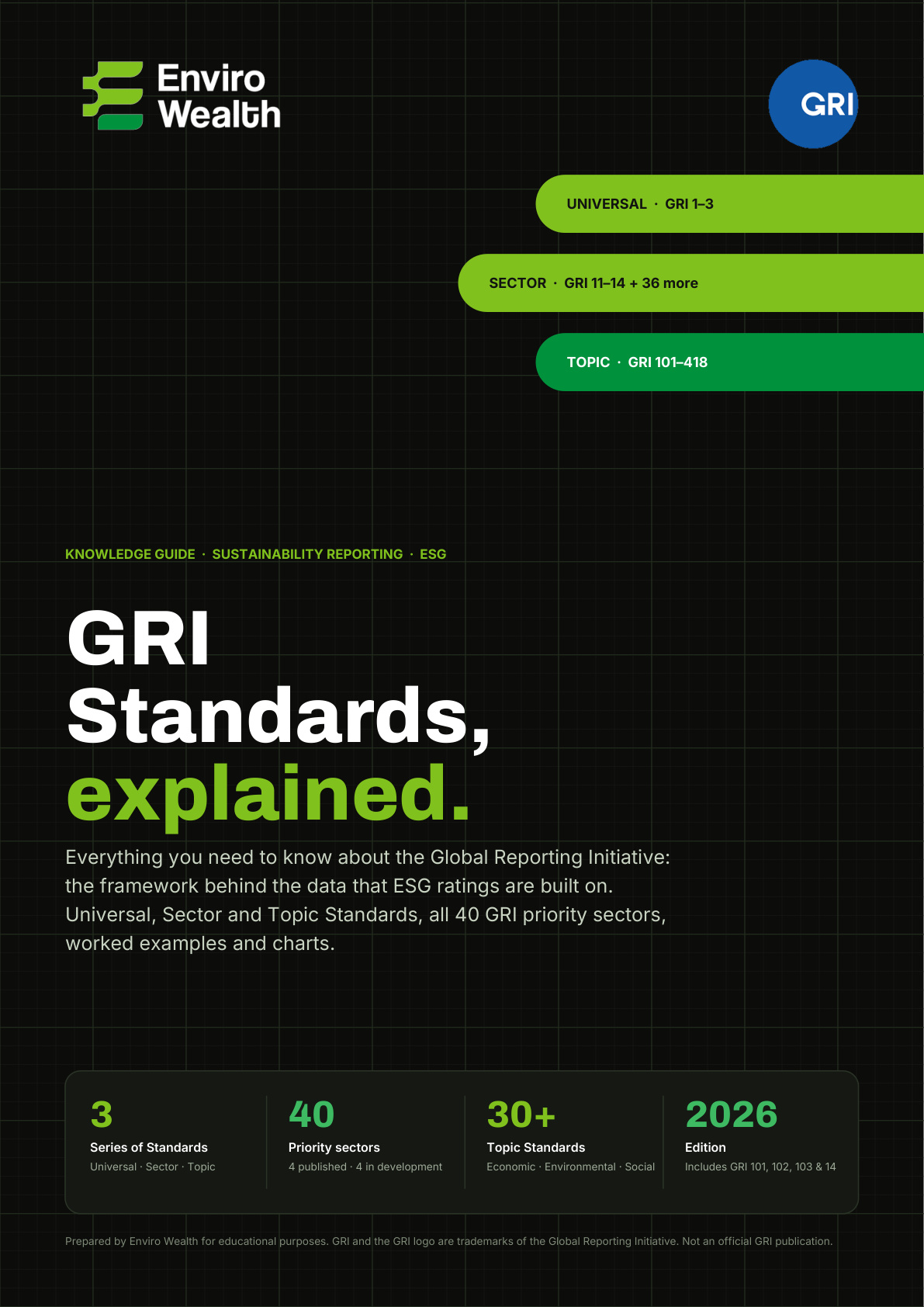
Complete Guide to the Global Reporting Initiative: Universal, Sector & Topic Standards
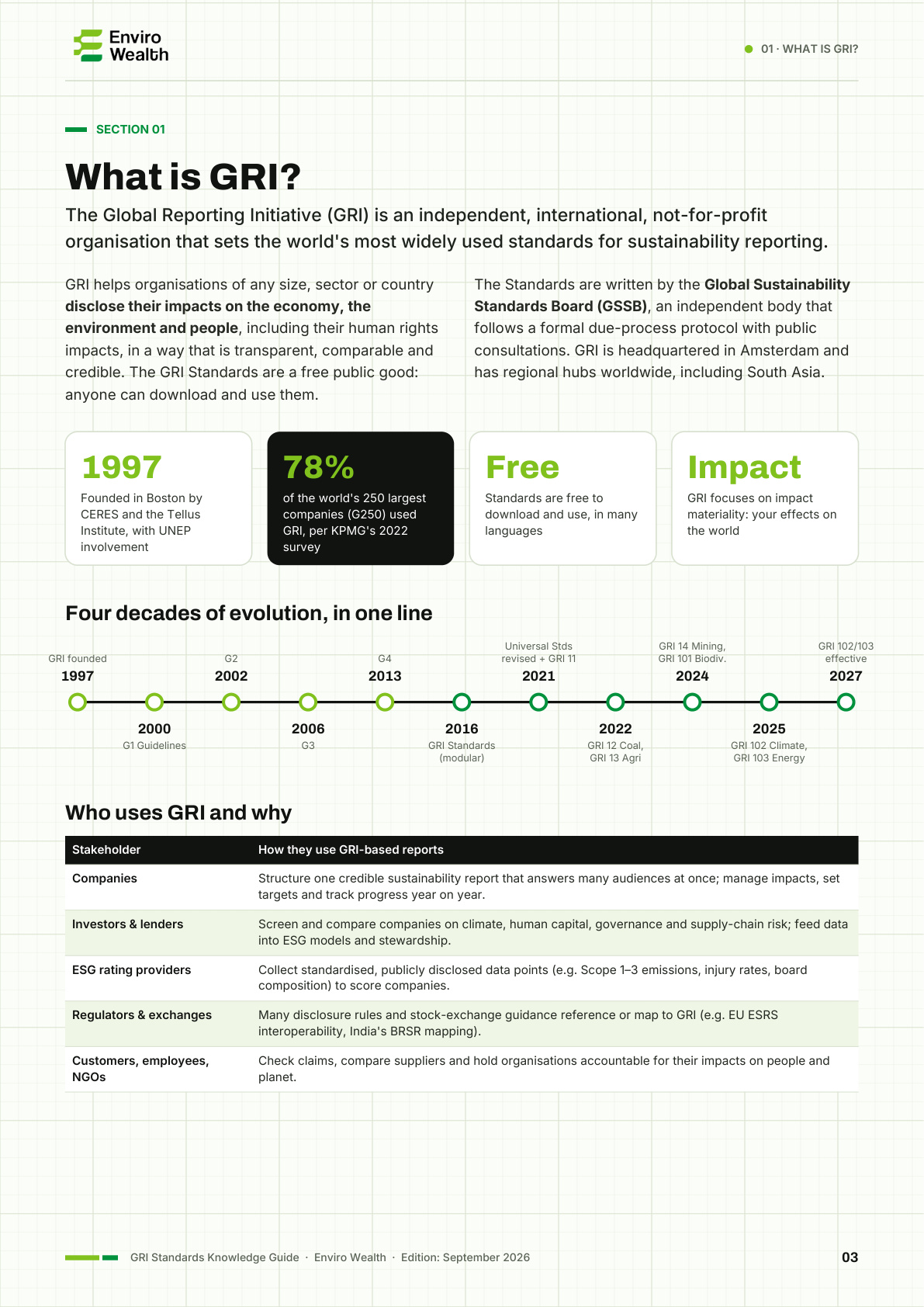
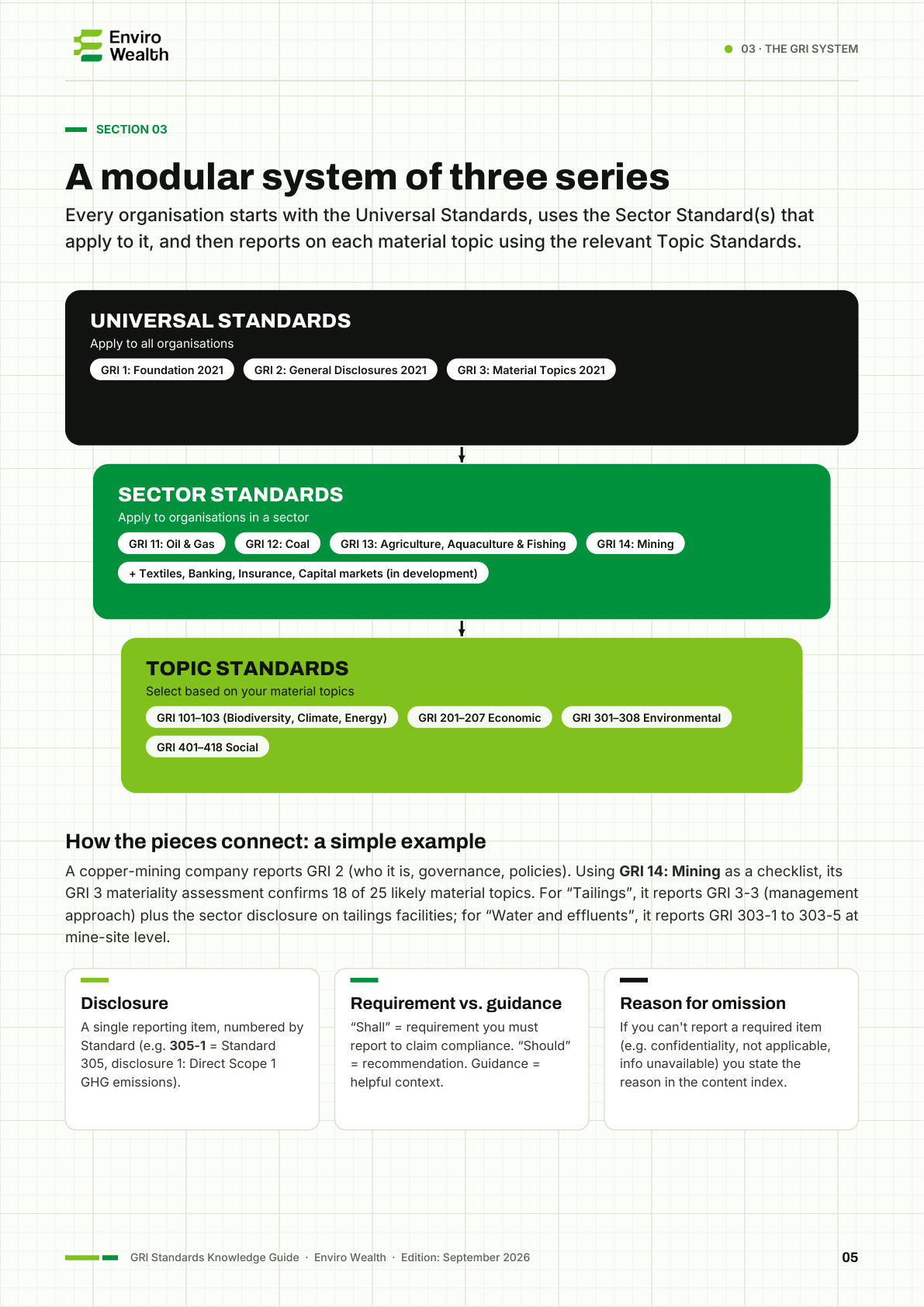
The Global Reporting Initiative (GRI) Standards represent the world's most widely adopted framework for corporate sustainability reporting. Used by over 14,000 organizations across more than 100 countries, GRI provides a modular, interconnected system designed to evaluate an enterprise's outward impacts on the economy, environment, and society. GRI forms the foundational data layer upon which ESG ratings, EU CSRD compliance, and SEBI BRSR disclosures are constructed.
Key Strategic Takeaways
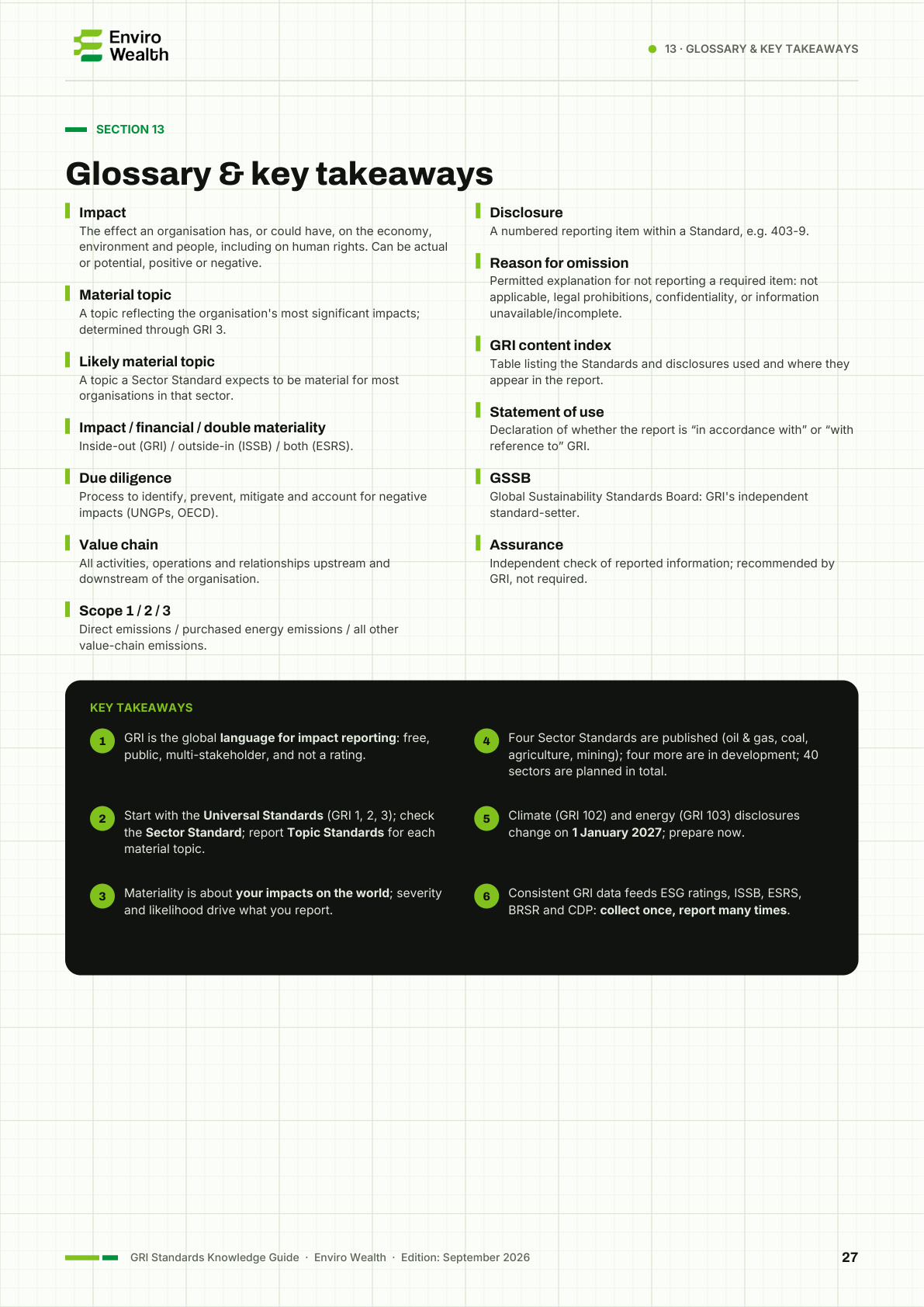
The GRI Standards provide the global baseline for multi-stakeholder sustainability reporting, used by over 14,000 organizations worldwide.
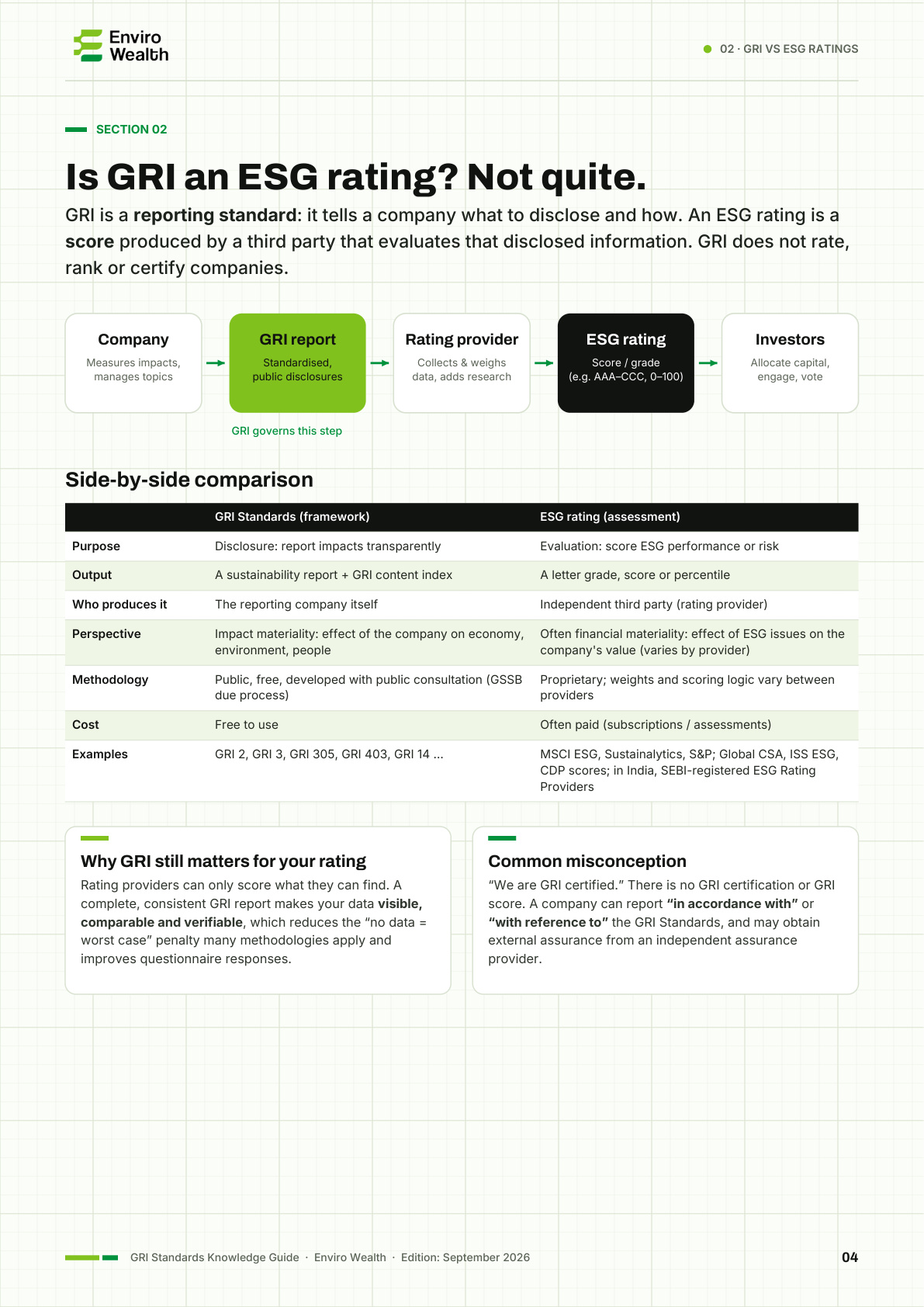
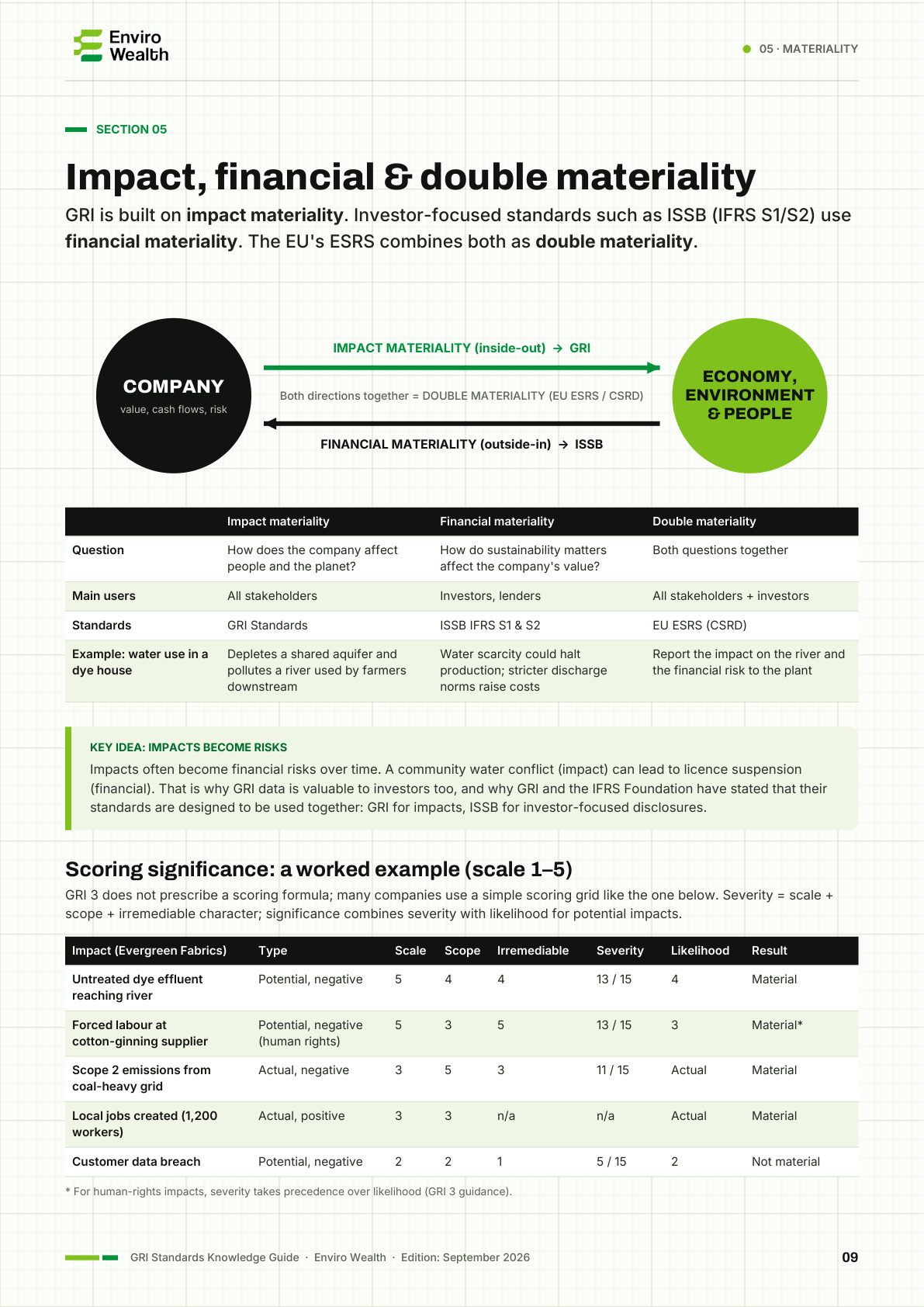
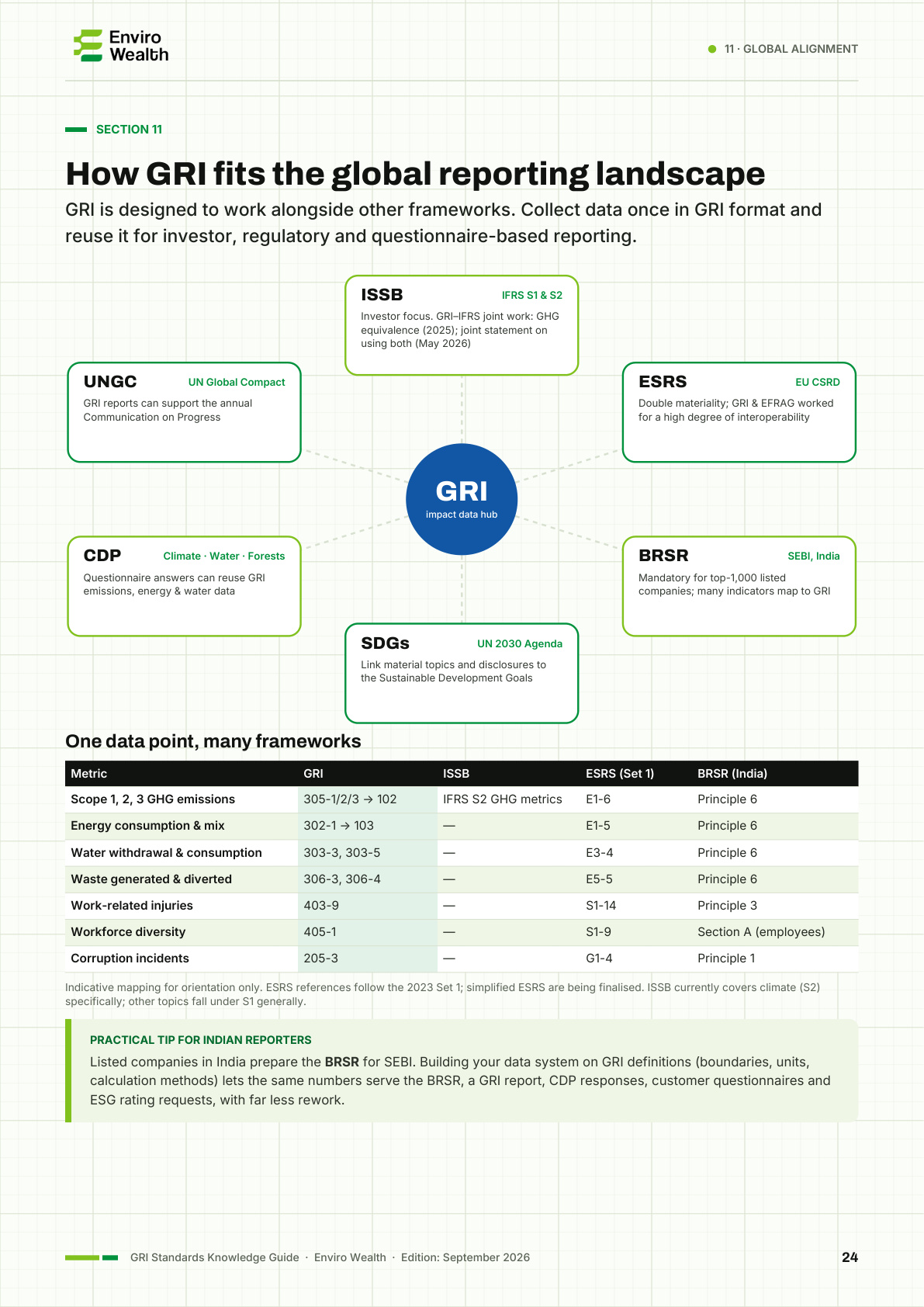
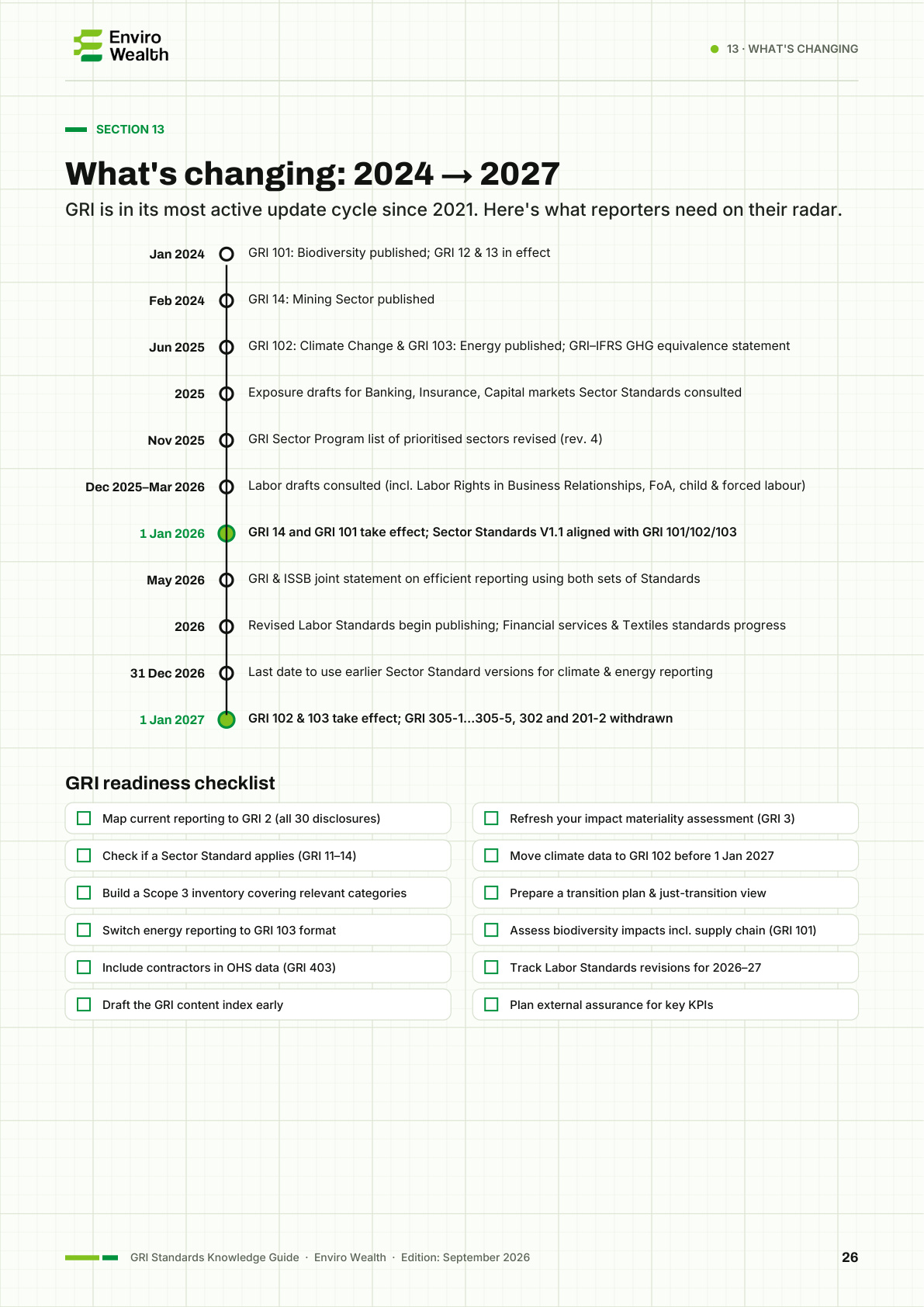
GRI evaluates outward impact materiality, making it the perfect complementary standard to financial materiality frameworks like ISSB/IFRS.
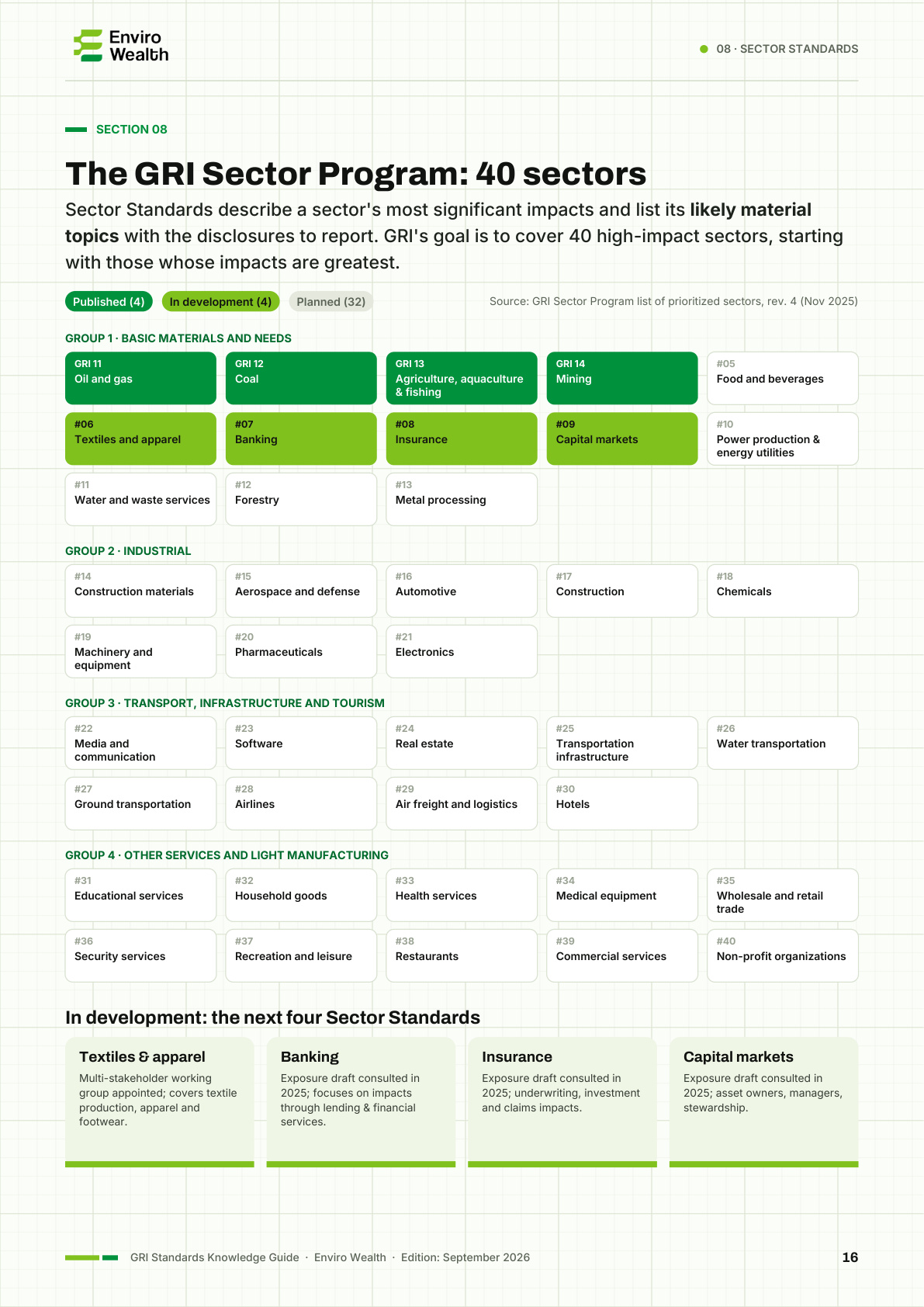
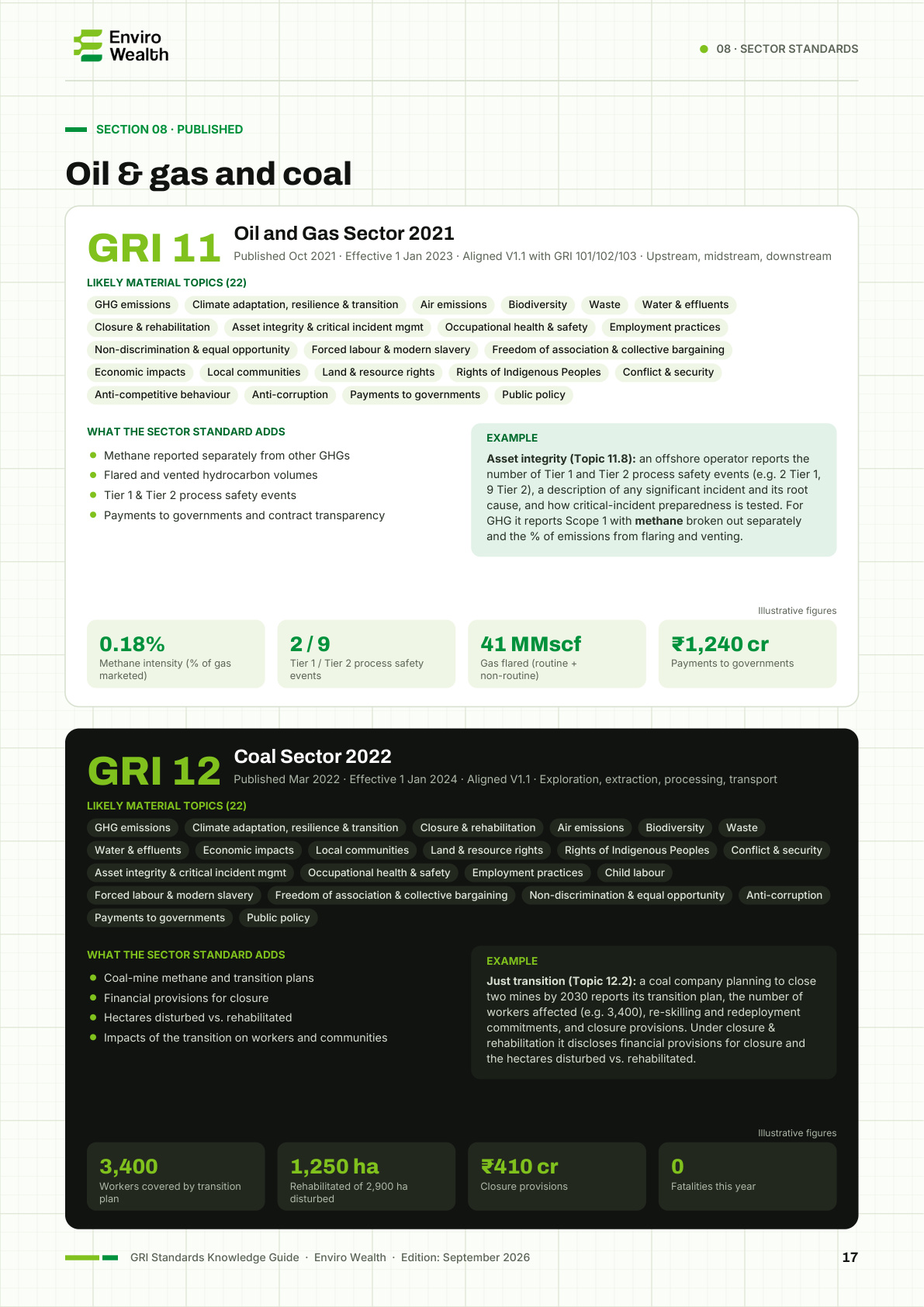
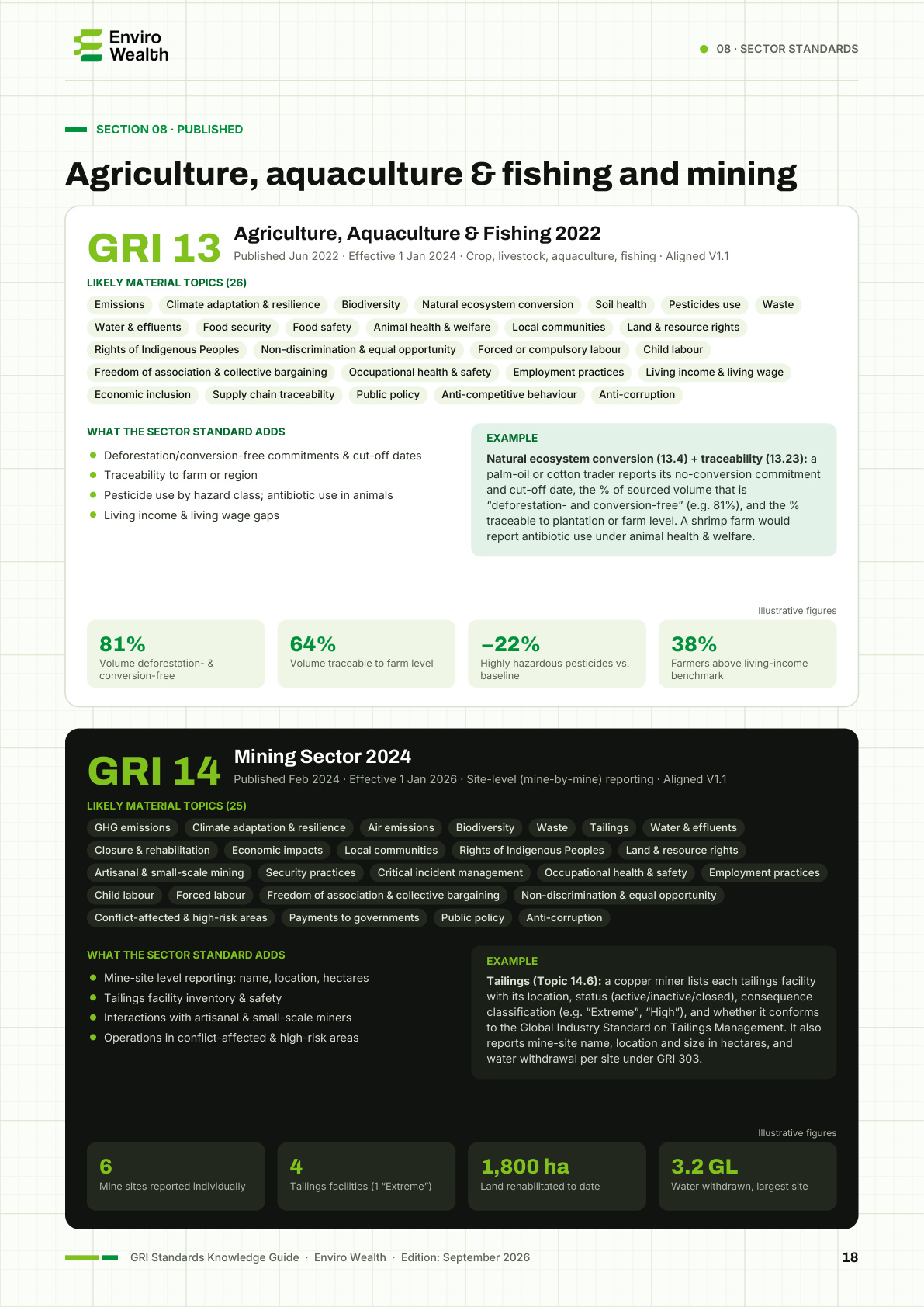
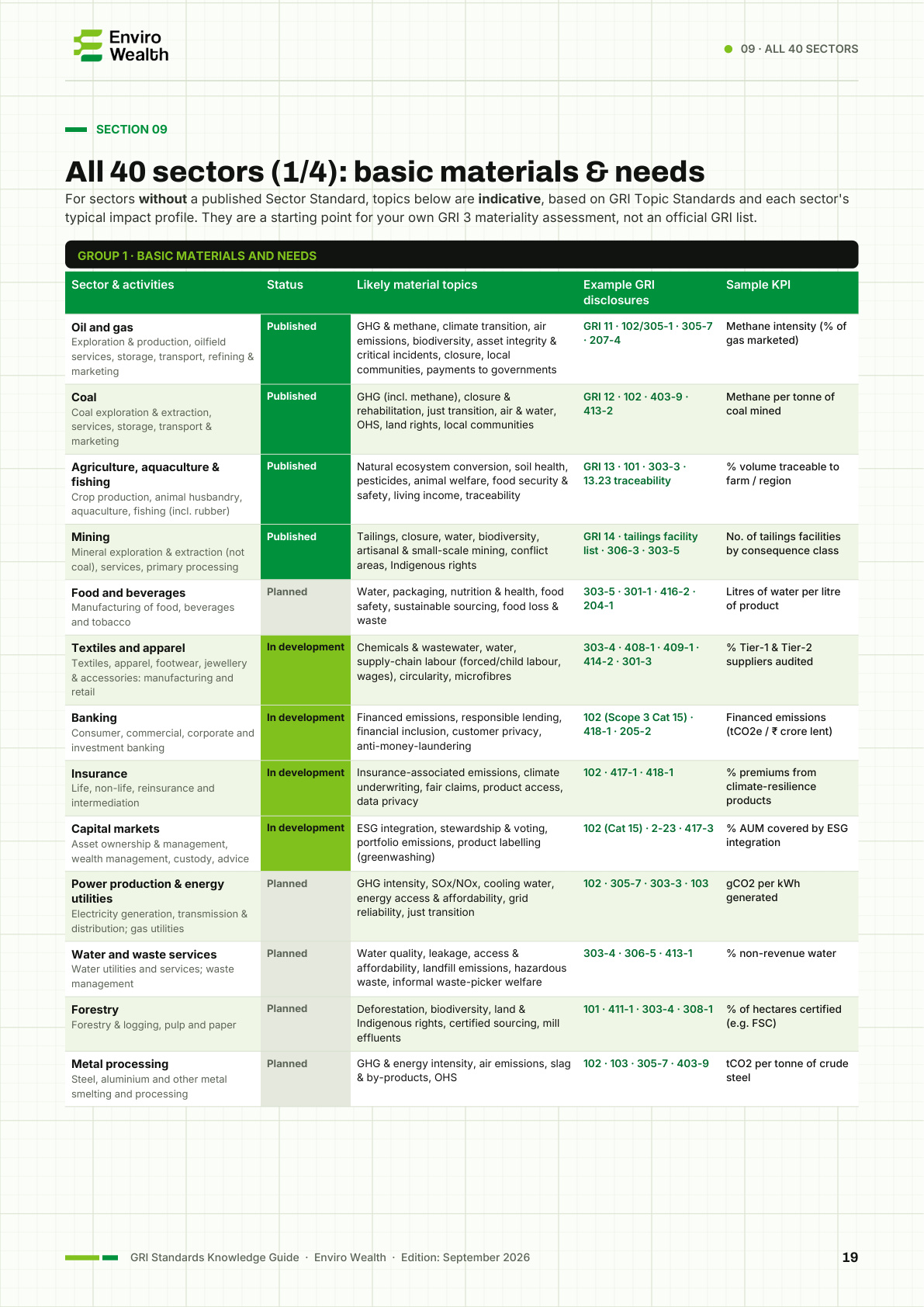
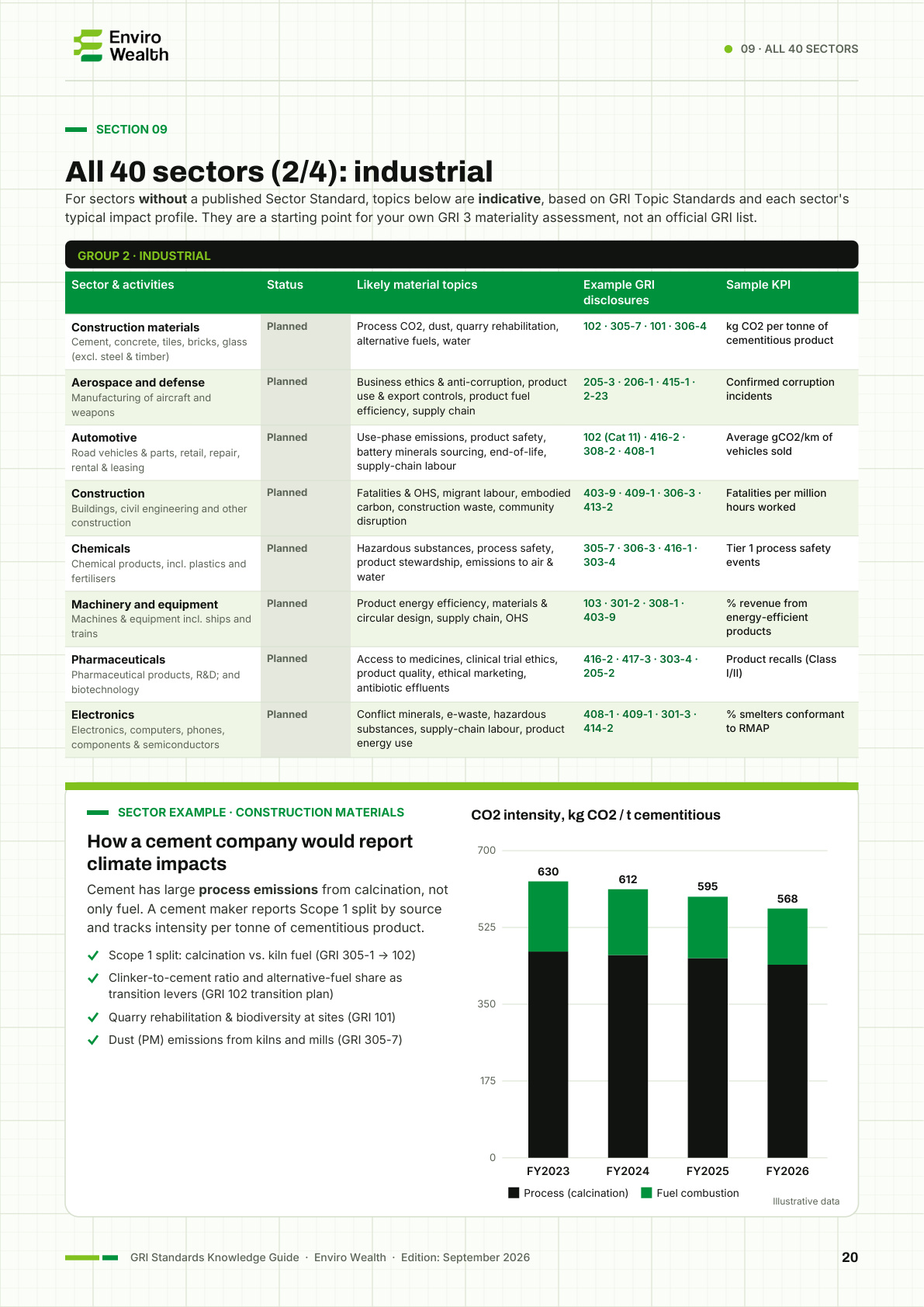
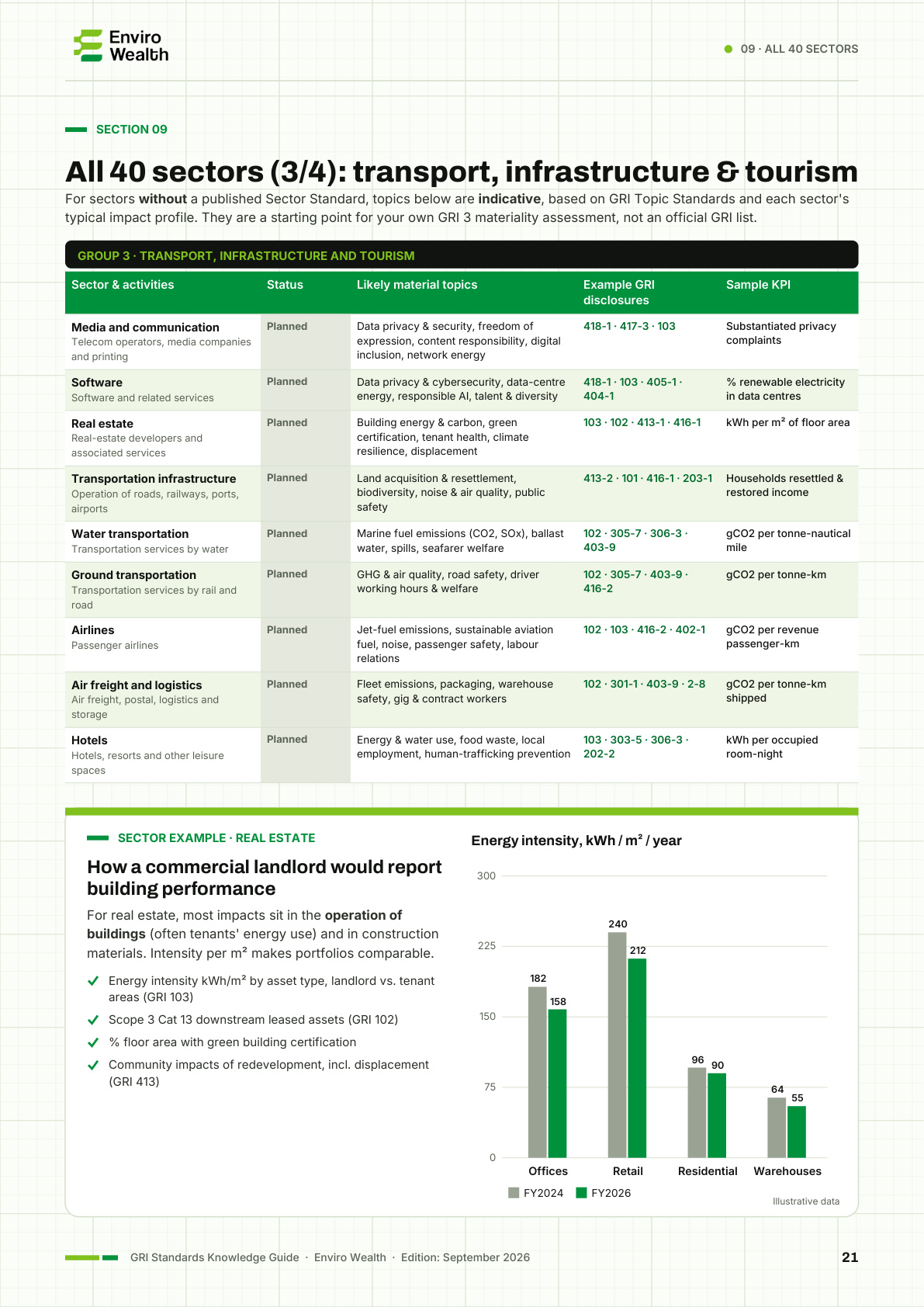
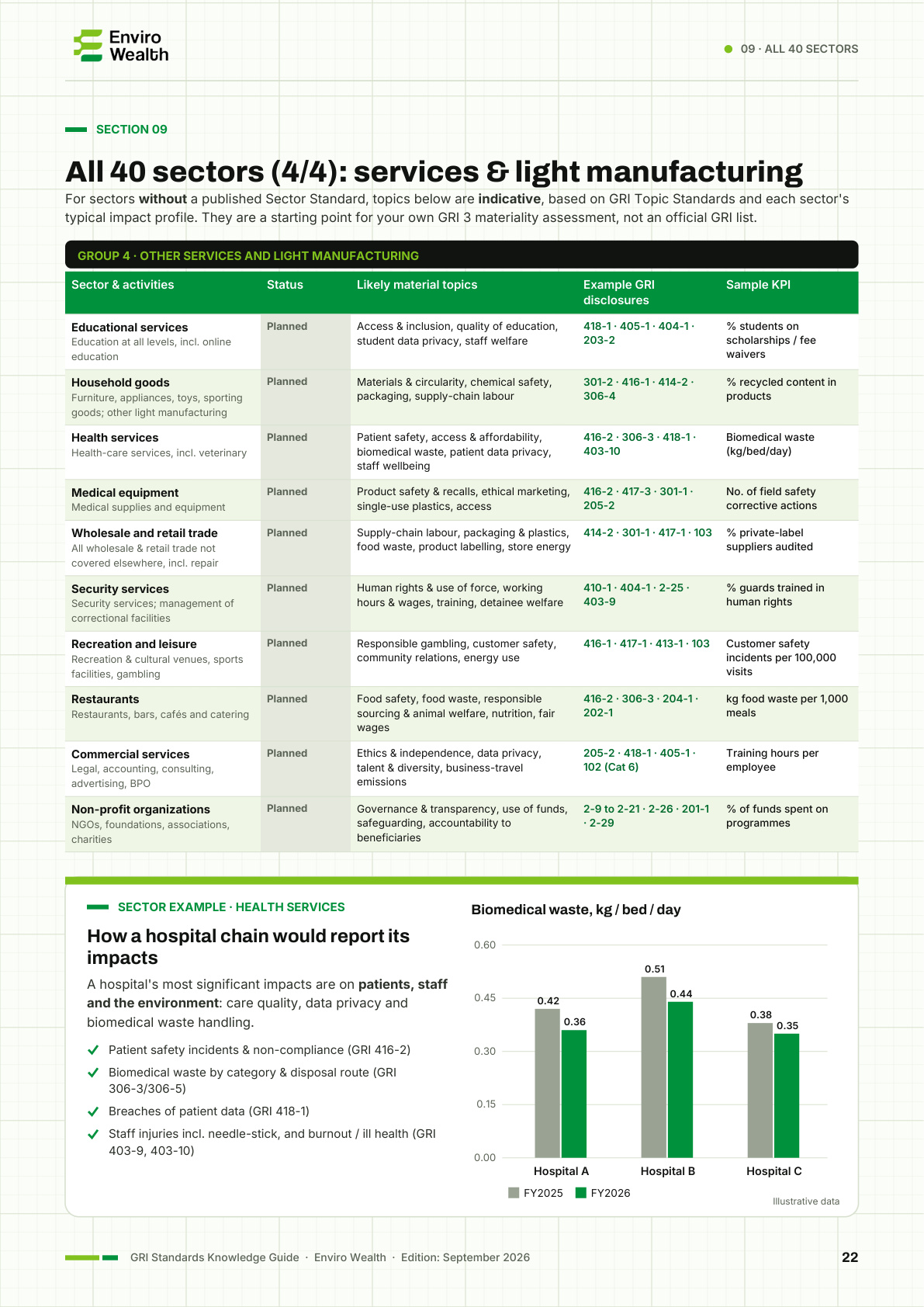
The 40 Sector Standards eliminate selective cherry-picking by codifying the mandatory non-negotiable topics for each specific industry.
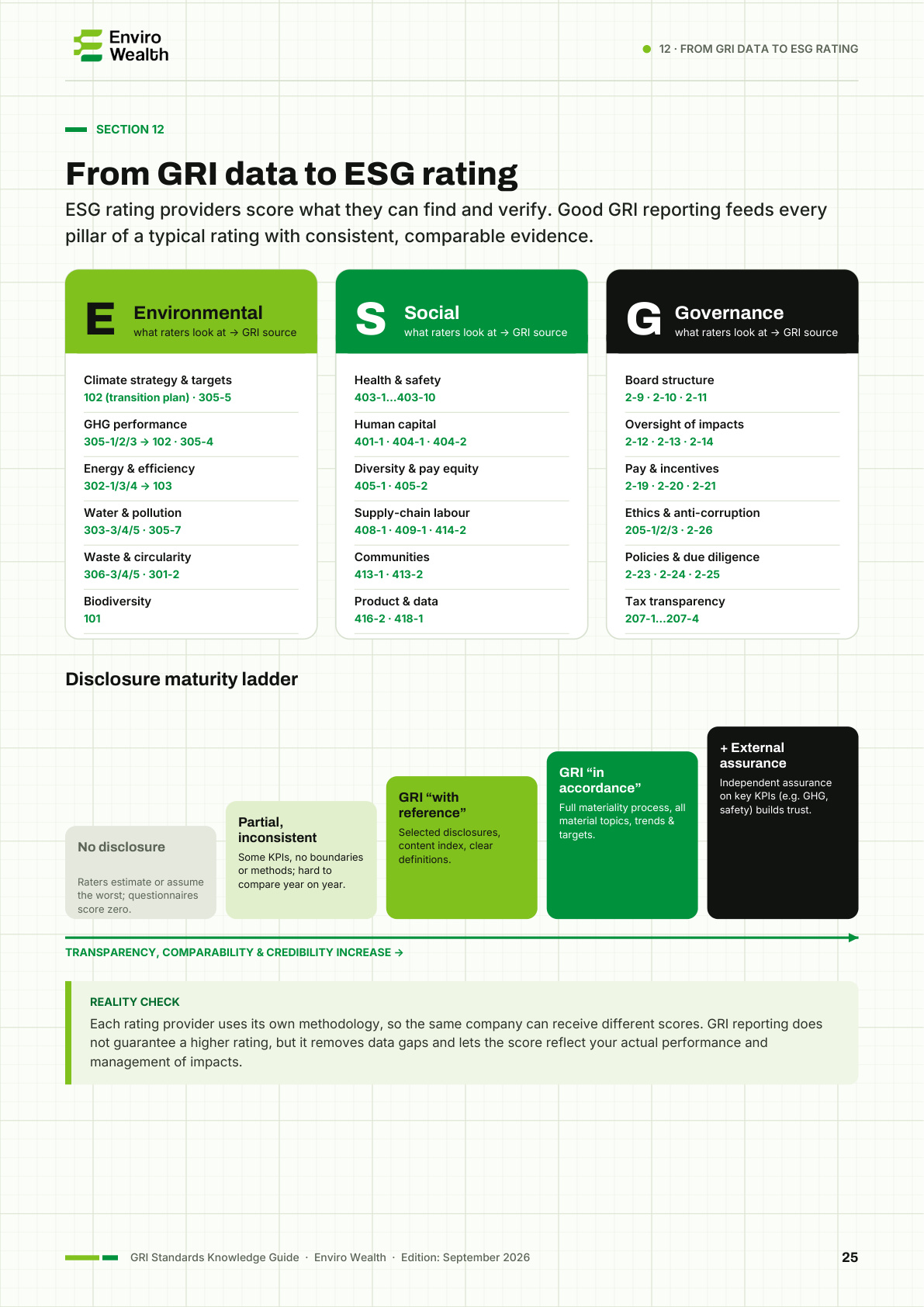
Reports prepared 'in accordance with GRI Standards' provide the primary audited data that institutional rating agencies (MSCI, S&P, Sustainalytics) evaluate.
How EnviroWealth Delivers Turnkey GRI Sustainability Reports
Our sustainability reporting practice manages your end-to-end GRI disclosure journey.
What is the difference between 'In Accordance' and 'With Reference' to GRI?
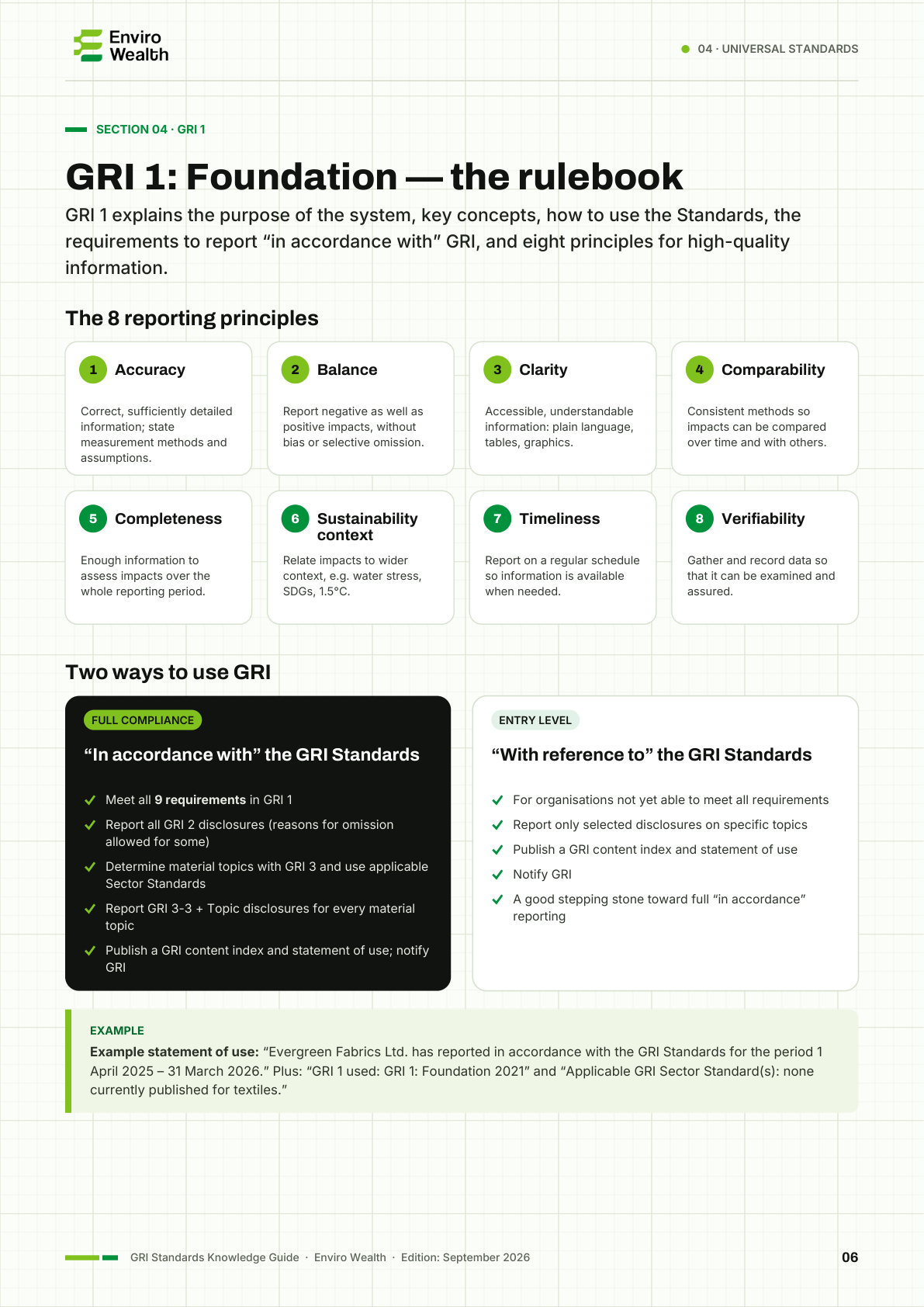
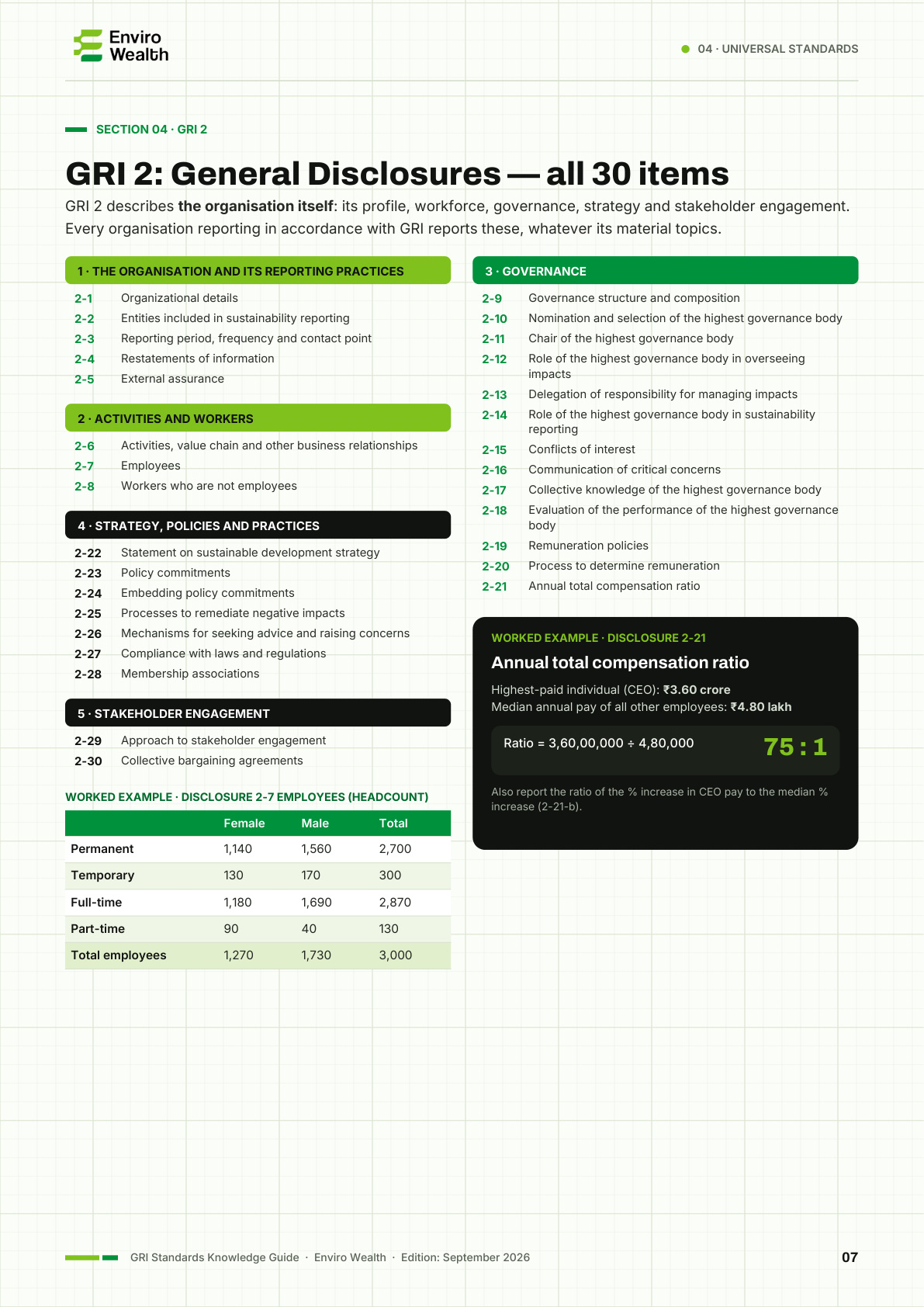
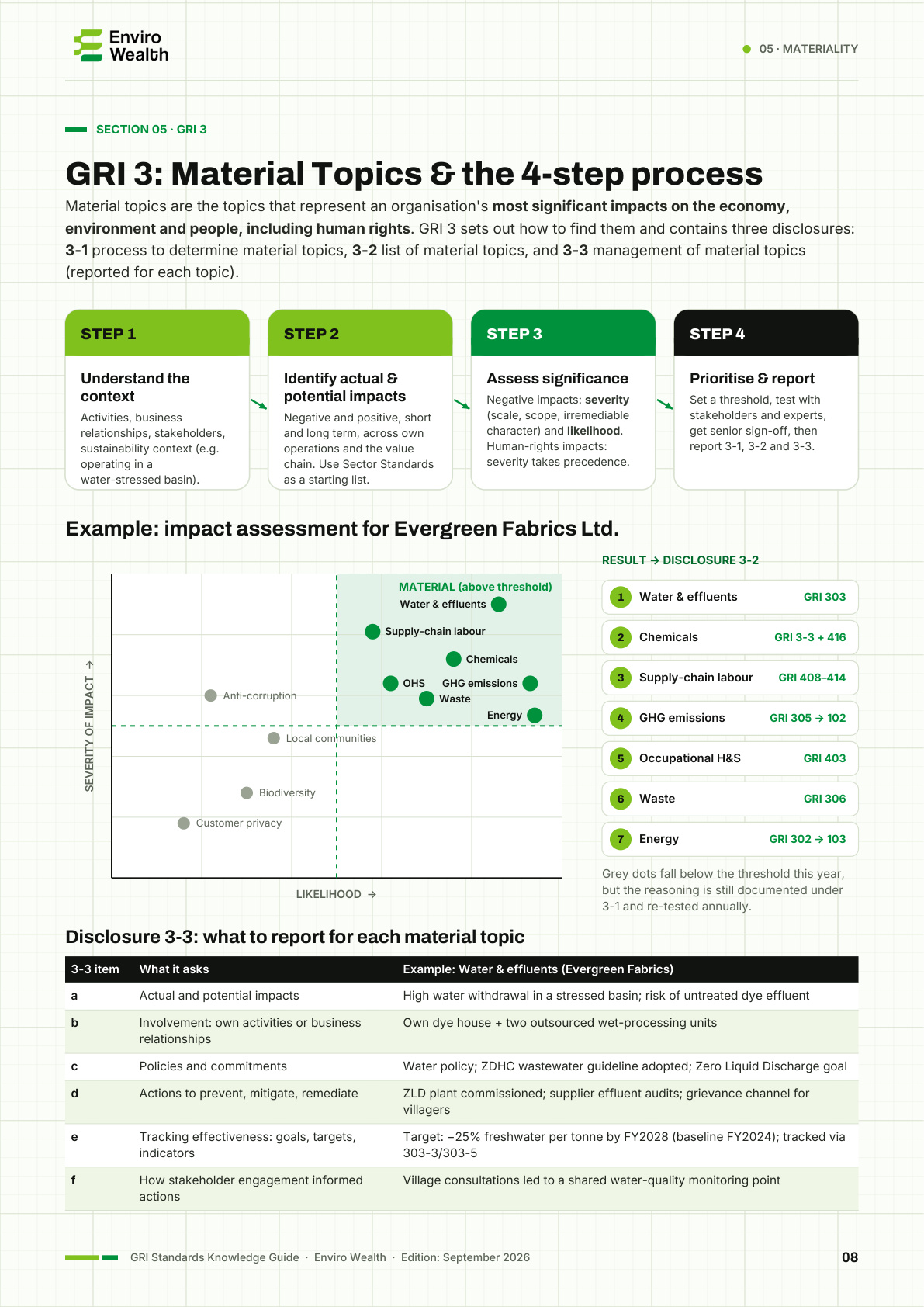
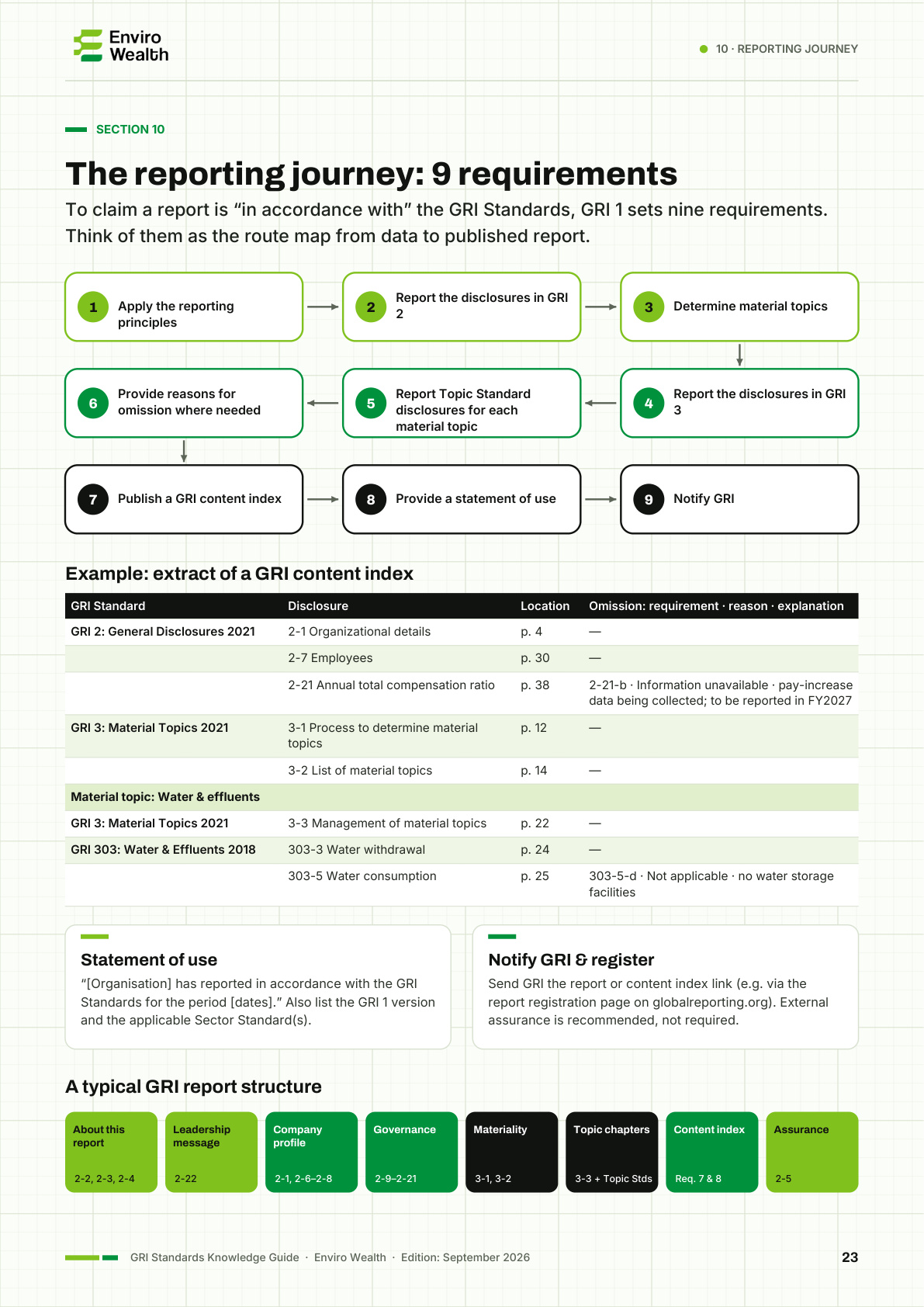
'In Accordance' means the enterprise has fulfilled all nine requirements of GRI 1: Foundation 2021, reported all GRI 2 disclosures, applied the formal GRI 3 materiality assessment, and fully disclosed all material topic standards. 'With Reference' is a lighter option used when an organization publishes selected data points with a simplified index without meeting full universal requirements.
How does a GRI report help comply with SEBI's BRSR in India?
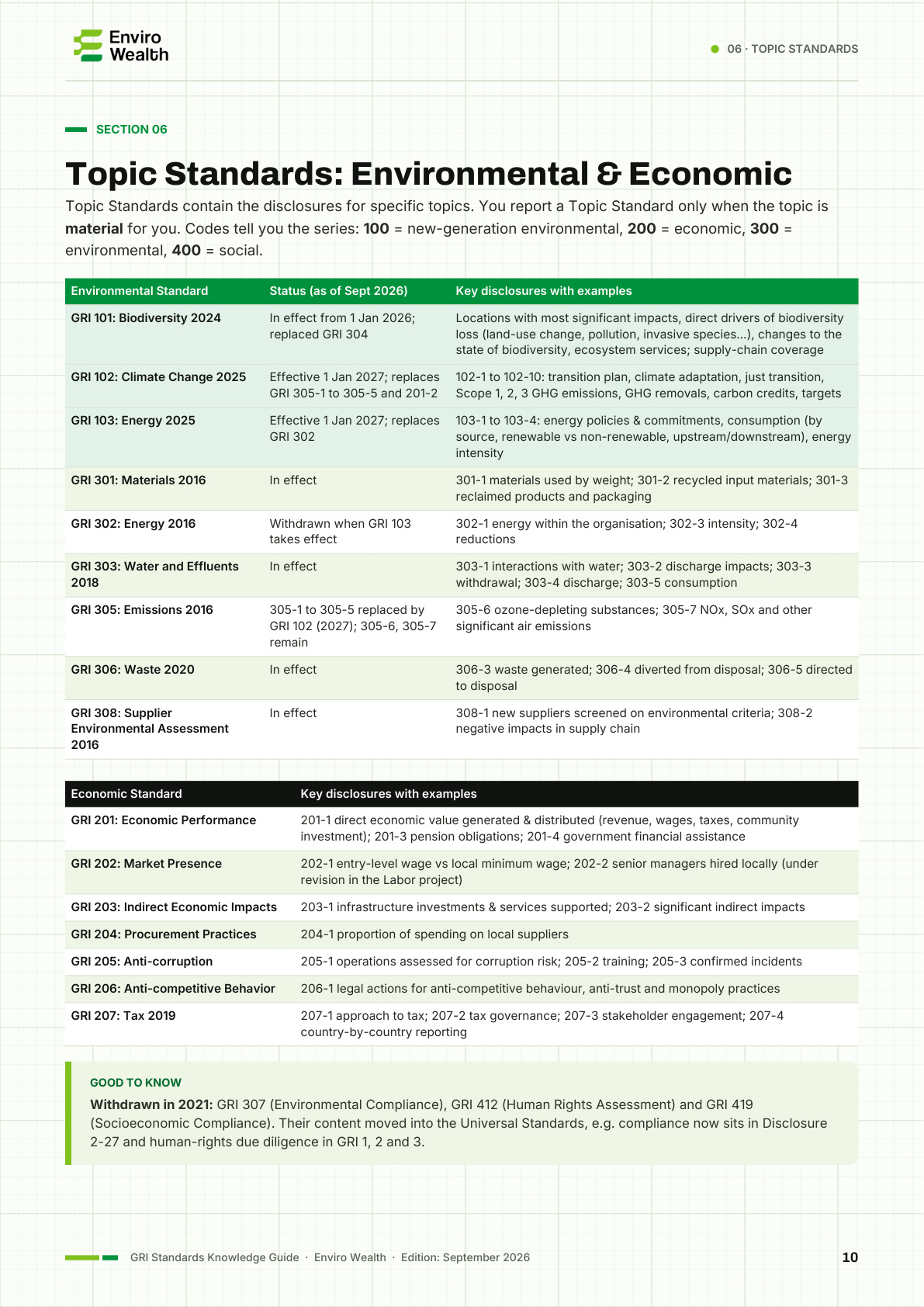
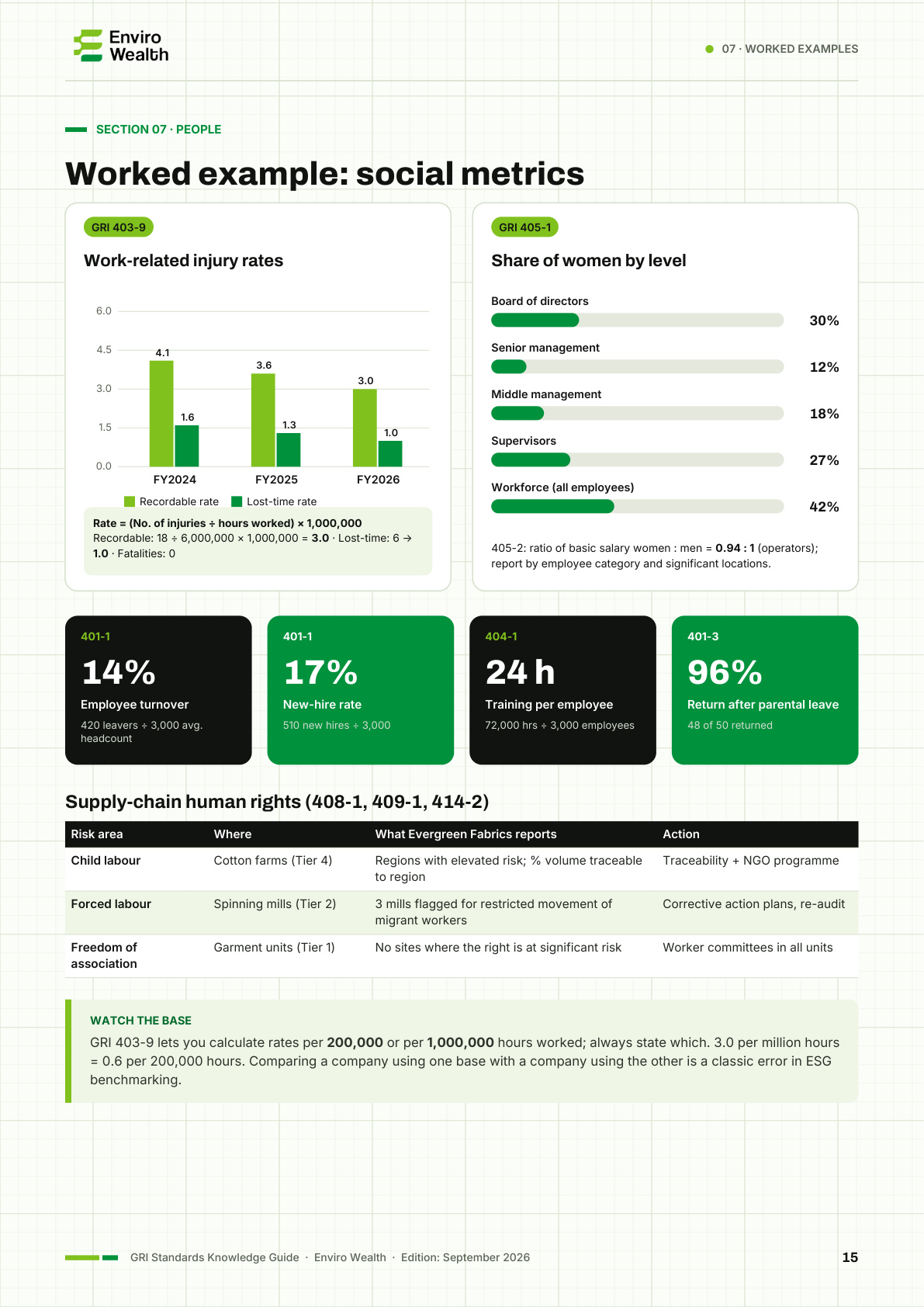
SEBI explicitly designed BRSR based on the NGRBC principles and GRI Standards. Almost all Section C principle indicators in BRSR (such as energy intensity, water consumption, GHG emissions, waste recycling, and lost-time injuries) map directly 1:1 with corresponding GRI Topic Standards.