
Life Cycle Assessment (LCA)
Complete Guide to ISO 14040/44: Environmental Impact Modeling Across the Full Product Life Cycle
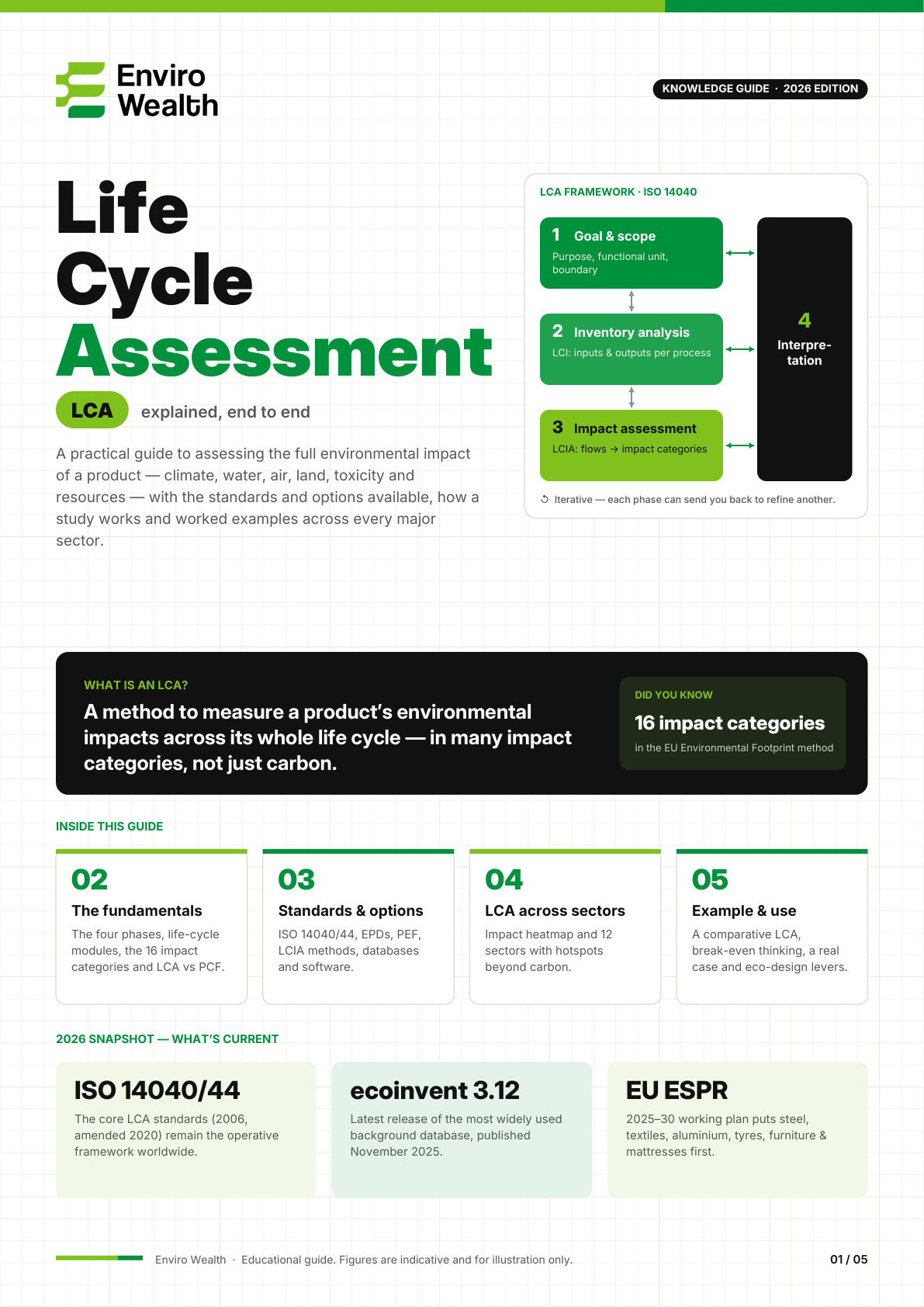
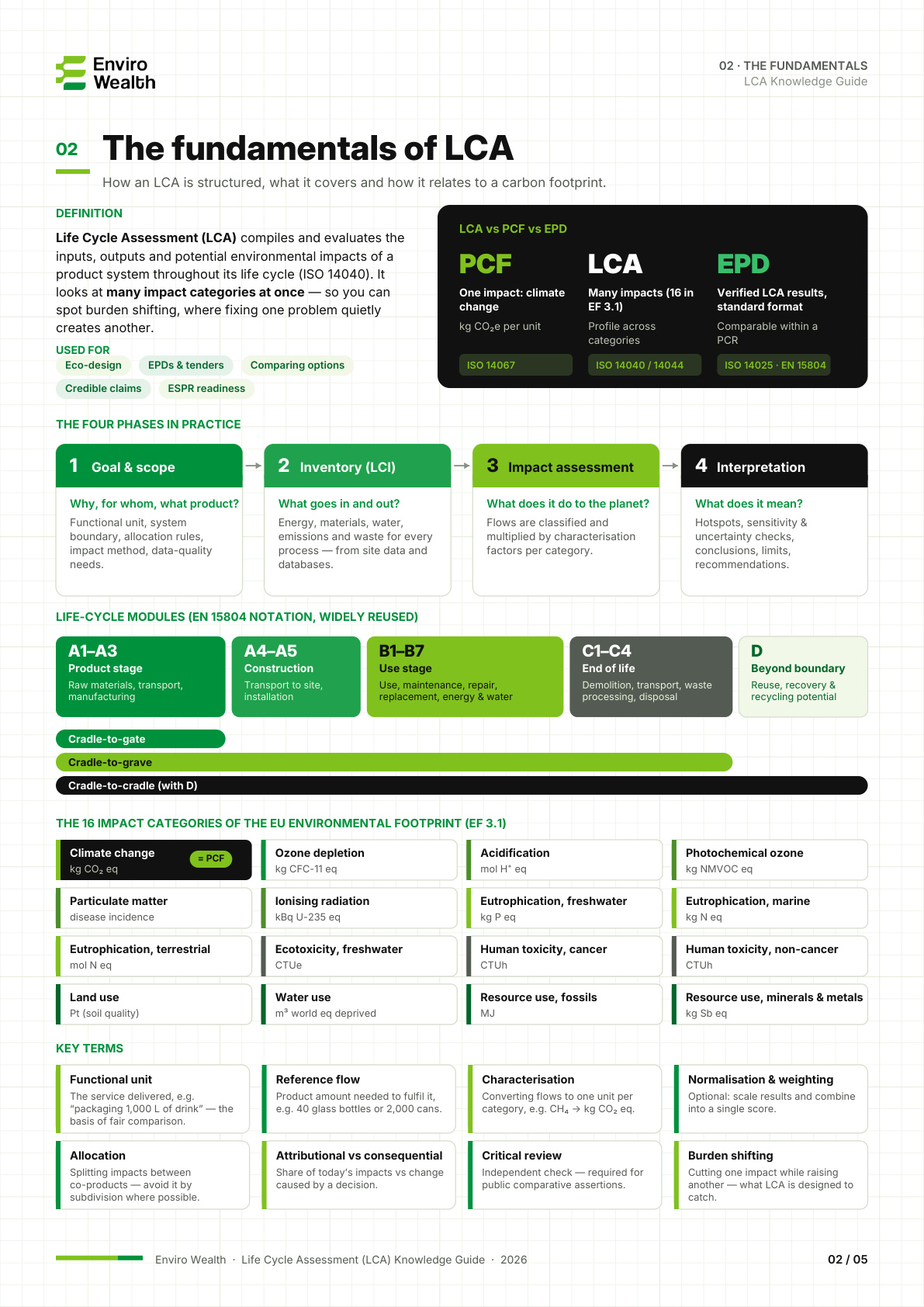
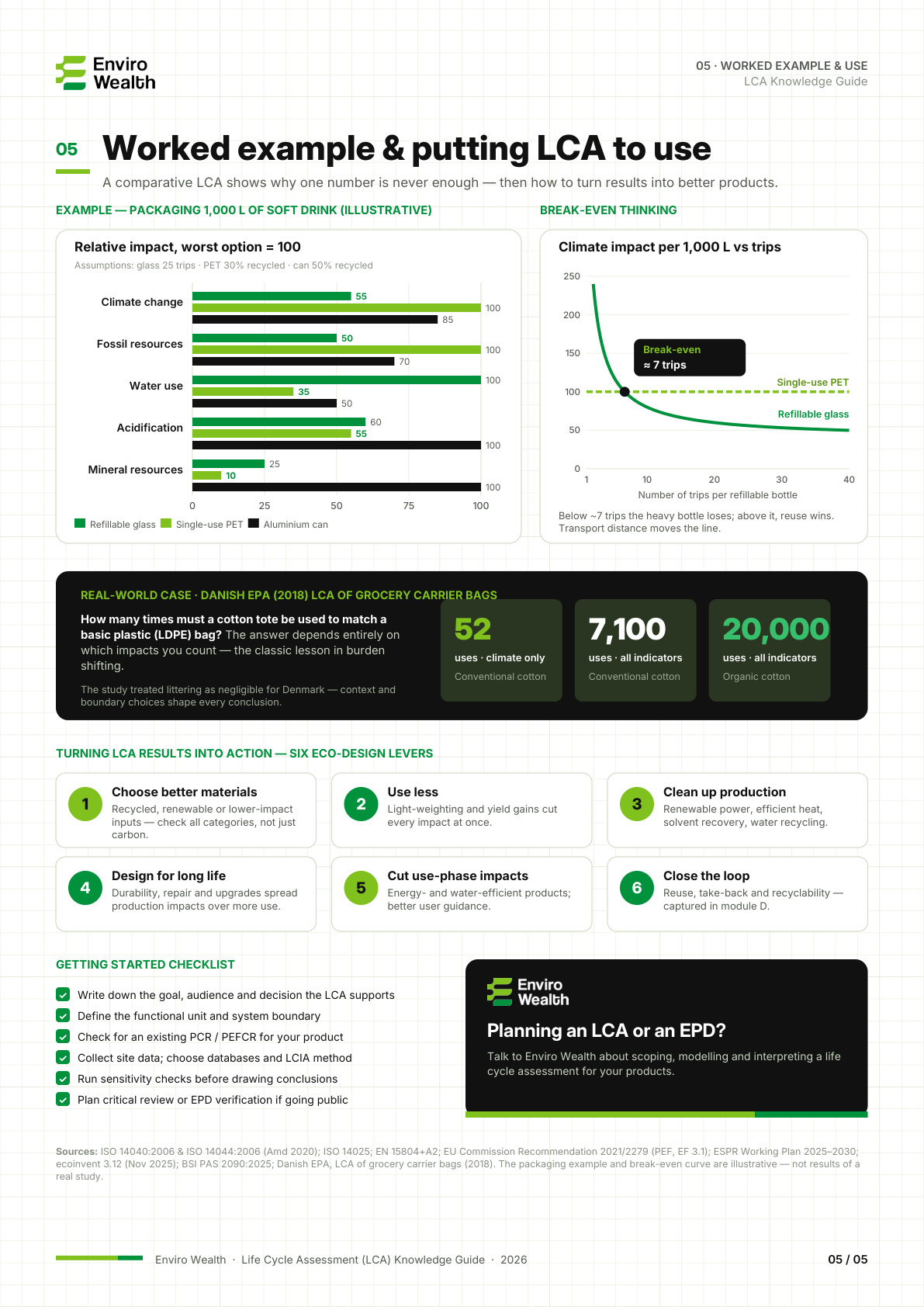
A Life Cycle Assessment (LCA) is the internationally standardized, science-based methodology (governed by ISO 14040 and ISO 14044) for quantifying the comprehensive environmental footprint of a product, process, or service. Unlike a Product Carbon Footprint (PCF) which isolates climate change, an LCA evaluates multiple environmental impact categories—including water scarcity, ozone depletion, acidification, eutrophication, human toxicity, and abiotic resource depletion.
Key Strategic Takeaways
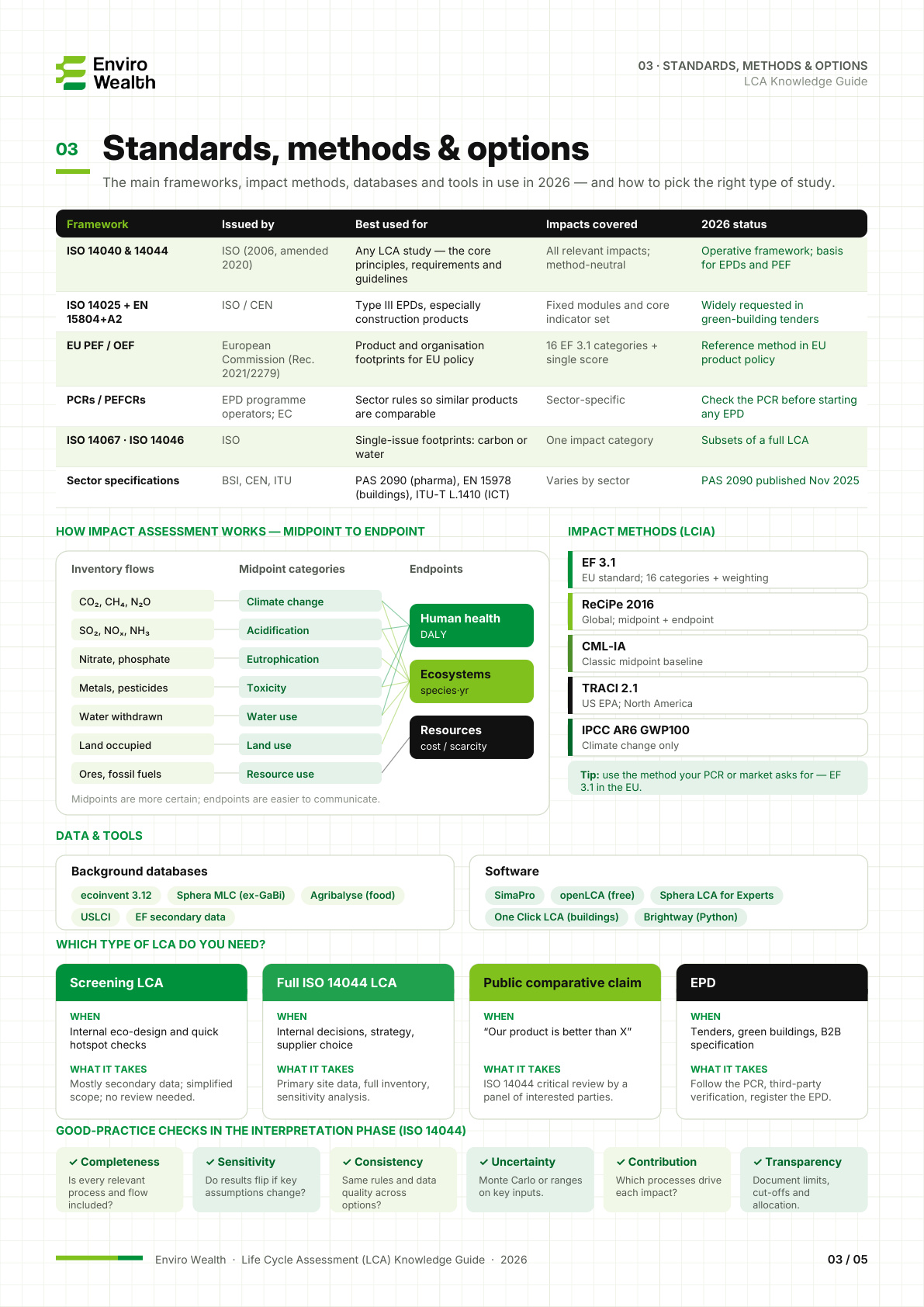
Life Cycle Assessment is the definitive scientific standard (ISO 14040/44) evaluating multi-dimensional environmental impacts.
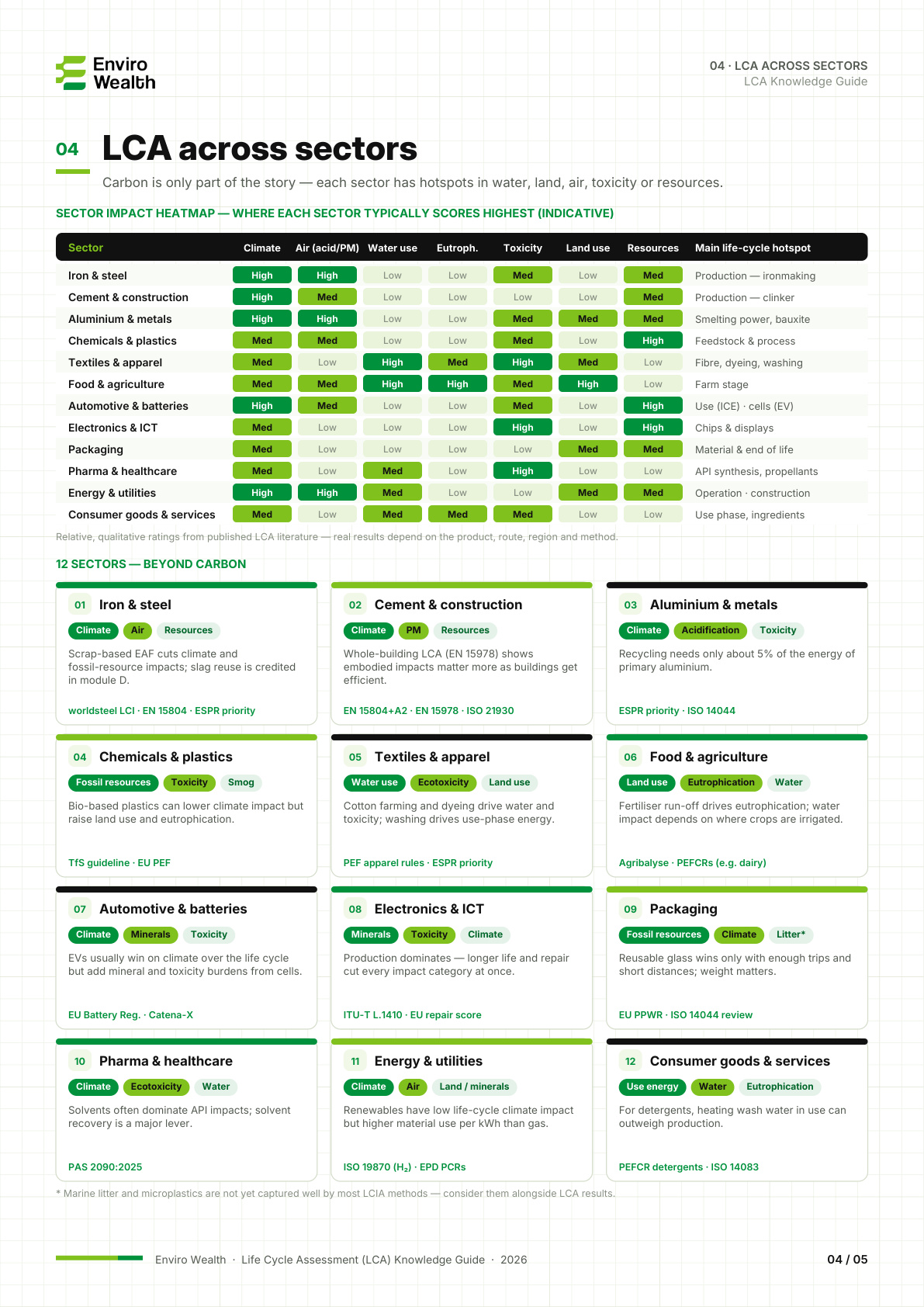
LCA evaluates water scarcity, acidification, eutrophication, and resource depletion alongside global warming potential.
An Environmental Product Declaration (EPD) is a verified, published Type III label derived directly from an ISO-compliant LCA study.
Conducting an LCA identifies the true environmental hotspots across the supply chain, enabling surgical eco-design improvements.
How EnviroWealth Delivers Certified LCA & EPD Studies
Our accredited LCA engineers guide your manufacturing team from bill of materials to published EPD.
How long does a complete ISO 14040/44 LCA study take?
A comprehensive cradle-to-gate LCA study typically takes 8 to 14 weeks depending on the complexity of the bill of materials, data availability across facilities, and whether third-party critical review panels are required for public comparative claims.
Why do international architects and buyers request EPDs?
In green building rating systems like LEED, BREEAM, and DGNB, using construction products that possess certified Environmental Product Declarations (EPDs) earns valuable points toward building certification. Having an EPD makes your product the preferred specification choice.